

Scaling Circular Economy Solutions through Interregional Collaboration (TRL 6–8)
The European Circular Innovation Valley (ECIV) Open Call 1 supports interregional innovation projects focused on the circular economy. The call targets consortia working at Technology Readiness Levels (TRL) 6–8 and aims to transform European value chains through circular materials, processes and business models. It is open to companies, research organisations, public authorities and civil society actors from eligible regions in the European Union and the United Kingdom. The total budget available is €9.13 million, and the submission deadline is March 2026
About ECIV
The ECIV is a project funded under Horizon Europe, designed to connect and strengthen regional innovation ecosystems across Europe in the field of the circular economy. The project brings together 18 partners from 8 countries with the shared objective of accelerating the transition towards circular, sustainable and competitive value chains.
ECIV aims to:
- Connect regional innovation ecosystems and foster interregional cooperation
- Support the development and scaling of circular economy solutions
- Mobilise public and private investment for circular innovation
- Reduce disparities between more and less advanced European regions
- Contribute to European and regional circular economy strategies
The project has a total budget of €27.16 million, of which €16.3 million is dedicated to cascade funding through open calls for third parties. ECIV is co-funded by the European Union under the Horizon Europe programme.
About ECIV Open Call 1
The first ECIV Open Call supports interregional circular innovation projects with a duration of up to 2.5 years. Projects must focus on experimental development and demonstration activities, helping solutions progress from TRL 6 to TRL 8. The call addresses circular economy challenges across several industrial sectors, including agro-food, textiles, energy, construction, electronics, packaging and bioeconomy.
The call concentrates its efforts on promoting innovation across all three key steps of industrial value chains. These objectives are non-exhaustive and reflect ECIV’s mission-oriented approach to accelerating the circular transition:
- Circular and sustainable new materials: supporting the development and demonstration of innovative materials, including new plastic solutions, green steel, CRMs, chemistry and biobased materials, new textile solutions, as well as solutions addressing construction and demolition waste.
- New industrial processes: fostering strategies and processes that support the 9 R’s of circularity, such as eco-design and life cycle thinking, product reuse and recovery strategies, industrial symbioses, maximum valorisation of waste and by-products, and the integration of renewable energy into industrial systems.
- New business models: encouraging the adoption and validation of circular business models, including circular supply models, extended product lifecycle models, sharing models and product-as-a-service approaches.
Why apply to ECIV Open Call 1?
EVIC Open Call 1 offers several advantages for applicants:
- Access to non-dilutive funding ranging from €500,000 to €3 million per Project
- Funding rates of up to 100%, depending on the type of organisation and region. More information can be found in Annexe 3: Regional specificities in the guide for applicants
- Opportunities to collaborate with partners from multiple European regions
- Support for scaling circular economy solutions in real industrial environments
- Access to the ECIV matchmaking platform and interregional networking activities
- Increased visibility at the European level through a Horizon Europe initiative
Who Can Apply?
Applications must be submitted by consortia that meet the following criteria:
- At least 3 independent partners from 3 different eligible countries (EU Member States and the United Kingdom)
- At least 2 partners from 2 different ECIV funding territories
- At least one company, including in the consortium
- The project coordinator must be based in an ECIV funding territory
The ECIV funding territories eligible under the first Open Call are:
- Comunidad Foral de Navarra (Spain)
- Noord Nederland, comprising the regions of Groningen, Friesland and Drenthe (Netherlands)
- Norra Mellansverige, comprising the regions of Värmland, Dalarna and Gävleborg (Sweden)
- Normandie (France)
- Scotland (United Kingdom)
Eligible applicants include companies (startups, SMEs and large enterprises), universities, research institutes, technological centres, public authorities, associations and NGOs.
Applicants from other EU Member States or the United Kingdom may participate in consortia, provided they bring clear added value to the project. However, only organisations based in the ECIV funding territories listed above can act as project coordinators and receive ECIV funding.
Individual applicants and natural persons are not eligible.
How to Apply?
Applications must be submitted online through the ECIV submission platform. The application process is single-stage and requires completion of an online form and official documents (budget, declarations, etc.).
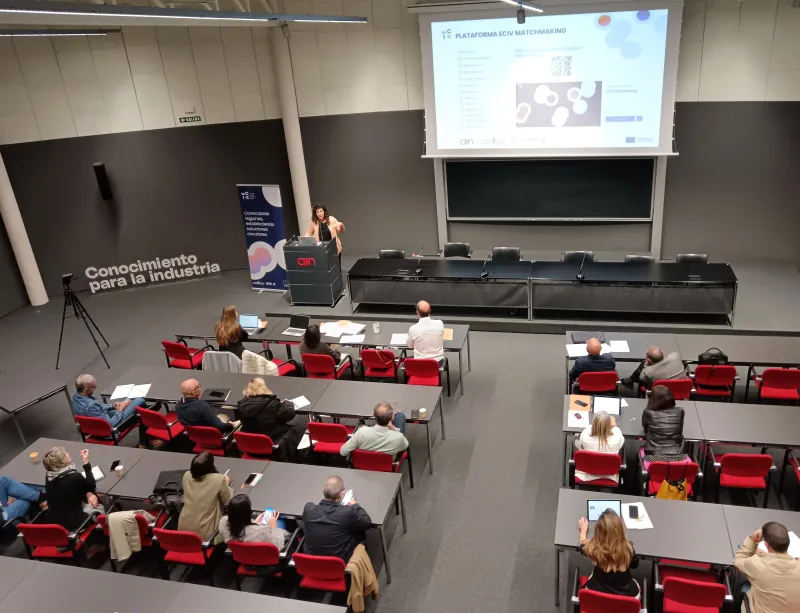
Applicants are strongly encouraged to register on the ECIV matchmaking platform to identify potential partners and build a strong interregional consortium before submission.
Important Dates
- Submission Deadline: 16th of March 2026
- Results announcement: May 2026
- Project start date: No sooner than 1st of July 2026
- Project finish date: No later than 31st of December 2028
Evaluation & Selection Process
The evaluation process consists of an eligibility check followed by an expert evaluation. Proposals are assessed by independent reviewers based on three criteria:
- Excellence (30%): alignment with ECIV objectives and innovation level
- Impact (40%): environmental, social and economic impact, including KPIs
- Quality and efficiency of implementation (30%): work plan, team capacity and budget coherence
Each criterion is scored on a scale from 0 to 5, with a minimum threshold of 3 required. Final funding decisions are made by the ECIV Call Steering Committee, subject to available budgets.
Programme Implementation and Financial Distribution
Selected projects are implemented over a maximum duration of 2.5 years and must start no earlier than 1 July 2026, following the signature of the funding commitments. Projects are carried out by interregional consortia under effective collaboration, with clearly defined roles and responsibilities for each partner.
The distribution of funds depends on the economic resources available within each ECIV funding organisation, the type of organisation of the beneficiaries, and the quality, relevance and thematic focus of the selected projects. Each ECIV funding organisation manages its funding scheme in alignment with its own regional strategic priorities.
National or regional funding strategies may include, but are not limited to, the careful selection of supported topics, maintaining a reasonable proportion of the regional call budget in line with the contribution of regional beneficiaries, adjusting initially committed budgets where necessary, setting limits on the budget requested per proposal, or restricting the number of proposals supported per applicant. In cases of oversubscription, the relevant ECIV funding organisation may decide to apply a revised funding rate for beneficiaries from its region.
Payment claims are submitted by each beneficiary to its corresponding ECIV funding organisation. The funding organisation assesses the technical and financial reporting and authorises the related payments. All payments are made by bank transfer by the ECIV funding organisation of the beneficiary’s region, which holds its share of third-party funds on behalf of the ECIV consortium. These conditions are communicated to beneficiaries from the outset and are formalised in the subsidy commitment or Subgrantee Agreement.
During the implementation phase, beneficiaries are required to participate in structured monitoring activities. At least three formal meetings are foreseen between the beneficiaries and ECIV funding representatives, with additional meetings organised if required by project progress.
Final Thoughts
ECIV Open Call 1 represents a significant opportunity for organisations developing circular economy solutions to scale their innovations through interregional collaboration.
With substantial funding, strong policy alignment and access to European innovation ecosystems, the call is particularly relevant for consortia ready to demonstrate impact on an industrial scale.
More Information
- Project website: https://eciv.eu/
- Open Call details: https://eciv.eu/calls/view/5/t1st-open-call
- Guide for applicants
- Support email: info@eciv.eu
Don’t miss the opportunity that could be the turning point of your success

Follow us on social media so you won’t miss any upcoming Info Days or Cascade Funding Opportunities


Open Call Analysis: GATE 5.0 Open Call for Agrifood and Technology SMEs